Product 01

Hottray

Food ordering and delivery platform built specifically for African cuisine markets in both Africa and the diaspora.

Commerce Logistics Diaspora Infrastructure

Problem statement

Generic delivery marketplaces are not optimized for the operating realities of African restaurants, especially batch-cooked menus, irregular hours, and community-driven discovery in diaspora cities.

  • African restaurants are buried inside citywide generic catalogs with weak cuisine-specific visibility.
  • Small kitchens struggle with unpredictable order timing and inaccurate delivery expectations.
  • No mainstream platform links diaspora spending intent directly to meal delivery back home.

Core solution

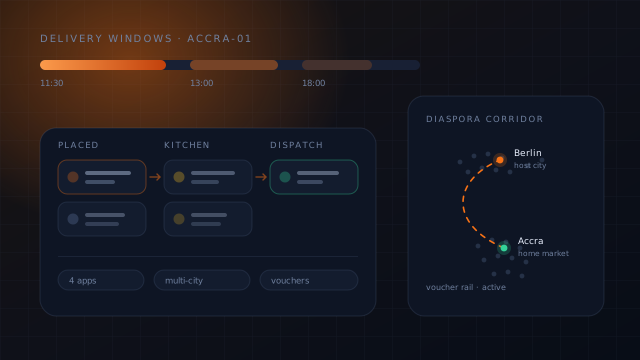
  • Delivery-window infrastructure for predictable order intake and zone-specific ETAs.
  • Four-app marketplace stack: Buyer, Vendor, Dispatcher, and Admin/Teams operations.
  • Multi-subsidiary architecture for fast city launch across currencies and local operating rules.
  • Cross-border voucher rail for diaspora-funded meal support in African home markets.

Current capability summary

ApplicationPrimary usersAvailable capabilities
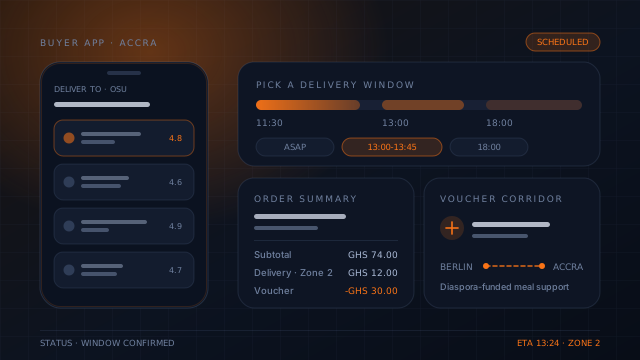
Buyer appConsumers and diaspora buyersVendor browsing, scheduled/ASAP orders, delivery tracking, vouchers, ratings and reviews.
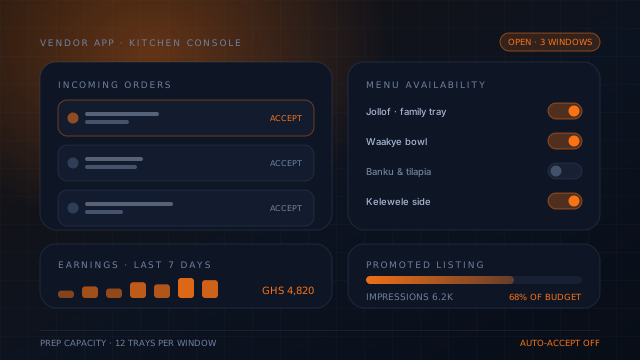
Vendor appRestaurants and kitchen operatorsMenu management, order approval flow, availability control, earnings tracking, promoted listings.
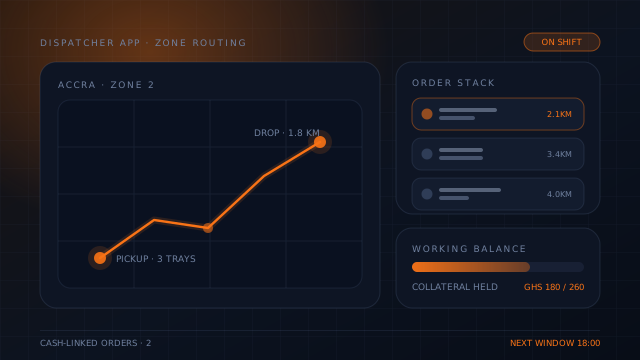
Dispatcher appDelivery ridersOrder acceptance by city/zone, route workflow, working-balance/collateral for cash-linked orders.
Admin/TeamsOperations and finance teamsCity-scoped operations, support, payout reconciliation, subsidiary setup, role-based staff access.

Strategic edge

  • Predictability-first operations versus generalized aggregator logic.
  • Cuisine and community curation for African diaspora discovery.
  • Dual-market growth model: African home markets plus diaspora-host city markets.
  • Expansion by configuration, not codebase duplication.

Revenue architecture

  • Order commissions with city-specific policy bands.
  • Zone-based delivery fees and surcharges.
  • Voucher and remittance-linked transaction fees.
  • Promoted listings and in-app campaigns for vendors.
  • Optional subsidiary/franchise commercialization in partner markets.

Execution roadmap

From twin pilot to multi-city density

Four phases on one framework: each city launches by configuration rather than a new codebase, so every phase reuses what the last one proved.

Accra→Berlin→West Africa & UK→Diaspora hubs

  1. Phase 00 · Pilot

    Twin-pilot readiness

    Accra and Berlin launch cohorts prepared with lean vendor and rider supply.

    • Accra
    • Berlin
    • Lean launch cohorts
  2. Phase 01 · Launch

    Public launch

    Open availability plus activation of the first cross-border voucher corridor.

    • Public availability
    • Voucher corridor live
  3. Phase 02 · Expansion

    West Africa and UK

    Expansion on the same subsidiary framework and city configuration model.

    • West Africa
    • United Kingdom
    • Subsidiary framework
  4. Phase 03 · Density

    Multi-city density

    Deeper coverage per market, extending into additional diaspora hubs.

    • Coverage per market
    • New diaspora hubs